Thomson Reserve launch brings more homes than Singapore’s entire Q3 new-home sales
The 1,268-unit Bright Hill Drive condo is scheduled to launch on 31 October. Its scale puts the quieter quarter—and buyers’ unit choices—in perspective.
Published 2026-10-25 · 6 min read
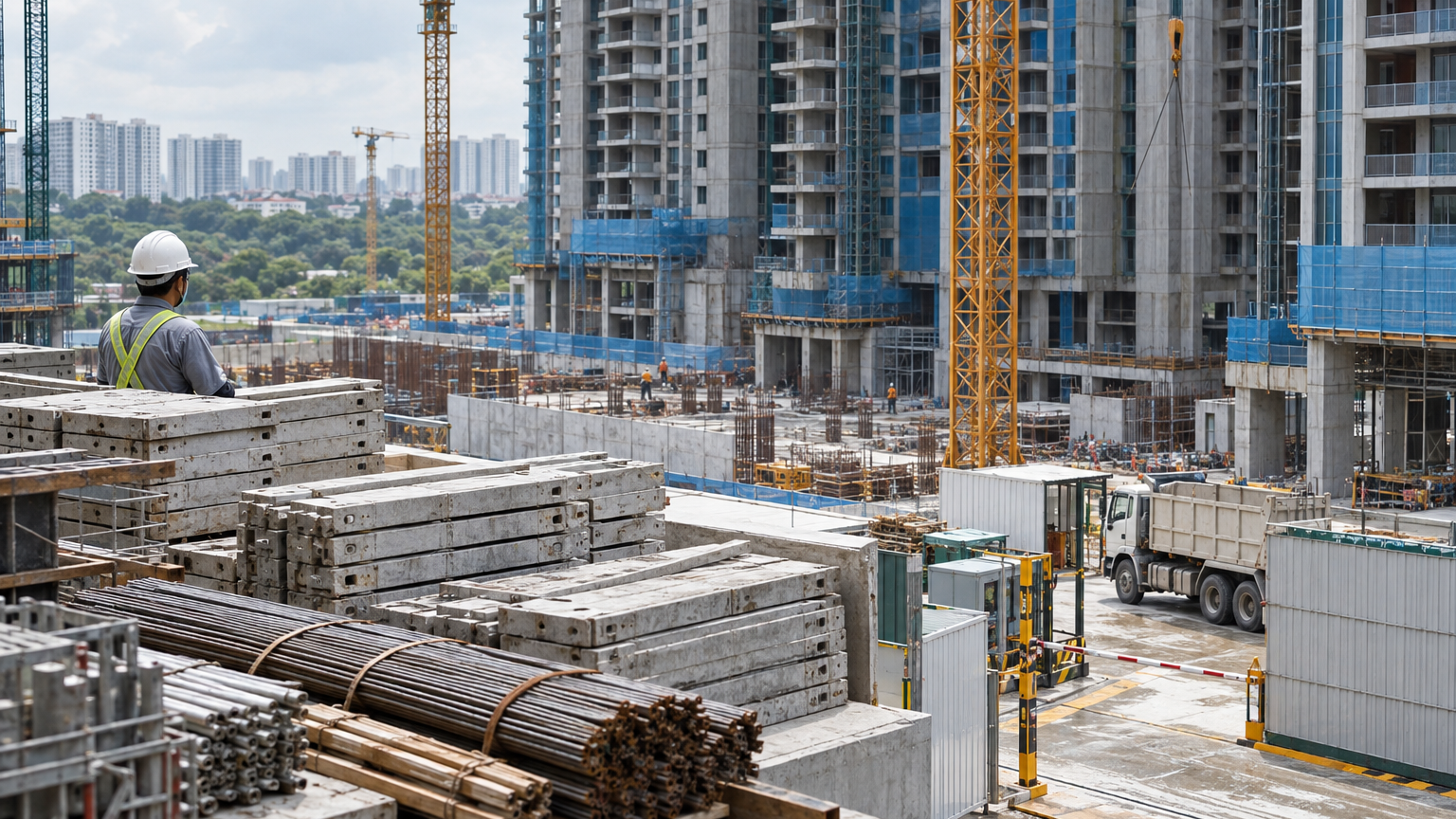
Thomson Reserve, a 1,268-unit condominium development at Bright Hill Drive, is scheduled to begin sales on 31 October 2026. Its scale offers a striking comparison: the project contains 85 more homes than developers sold across Singapore’s entire private new-home market in the previous quarter, excluding executive condominiums (ECs).
For buyers comparing launches, that means a substantial new option is arriving after a quieter sales quarter. But the useful question is more specific than whether sales will rebound: which homes in this development deserve a place on your shortlist, and what alternatives should you compare before booking? Thomson Reserve’s actual take-up and final transaction prices were still unavailable at the reporting date of 25 October.
Why one launch matters so much this quarter
Developers sold 1,183 new private homes in Q3 2026, down from 2,141 in Q2, according to URA’s statistics released on 23 October. That is a decline of 958 homes, or 44.7%, calculated from the official figures. Both quarterly counts exclude ECs.
The number of uncompleted homes developers launched also fell, from 1,783 in Q2 to 1,140 in Q3—a calculated decline of about 36.1%. Fewer homes were brought to market at the same time that fewer were sold. The figures establish a quieter quarter, although they do not isolate how much of the sales decline came from launch timing rather than buyers’ willingness to purchase.
Thomson Reserve’s total project size is approximately 107% of Q3 developer sales, calculated by dividing 1,268 by 1,183. This compares a development’s inventory with a quarter’s completed sales; it is not a prediction that every unit will be released or bought at launch.
That distinction helps explain the Q4 recovery forecast. Property adviser CBRE expects activity to improve and identifies Thomson Reserve as a possible outlet for pent-up demand. This is an analyst outlook, rather than a sales result. The next meaningful evidence will be how many homes buyers actually purchase and at what prices.
What buyers can establish about Thomson Reserve
Thomson Reserve is a 99-year leasehold development jointly developed by CapitaLand Development, UOL Group and Singapore Land Group through Tamarind Development Pte Ltd. CapitaLand’s 15 October announcement set out a public preview beginning on 17 October, followed by the scheduled 31 October sales launch.
The developer describes six residential blocks: two of 30 storeys and four of 21 storeys. It also says the development will have a sheltered walkway connection to Upper Thomson MRT station. These are disclosed development particulars, not observations of a completed estate.
For a household that relies on public transport, the proposed sheltered connection is a concrete feature worth investigating. At the preview, ask to see the route from the residential block you are considering—not merely the development boundary—to the station connection. A project-level connection and your daily front-door journey are different questions.
Likewise, use the disclosed block arrangement to frame questions rather than assume that all homes offer the same experience. Ask where your preferred unit sits, what it faces and how its route to shared facilities works. Without verified stack-level information, there is no sound basis here for naming a particular block or floor as the best choice.
Prices rose even as fewer new homes sold
The other important Q3 number is 1.4%: that was the quarter-on-quarter increase in URA’s private residential price index, compared with 0.5% in Q2. Prices therefore rose faster during a quarter when developers sold substantially fewer new homes.
These figures answer different questions. The price index measures changes in private residential prices; the developer-sales count records the number of new homes sold. Reading them together is useful, but neither supplies a fair price for a particular Thomson Reserve unit.
For your own comparison, start with the total purchase price and the space your household can actually use. Then examine what any additional spending buys: another usable bedroom, a more workable living area, a preferred outlook or a shorter daily journey. These are comparison questions, not claims that Thomson Reserve provides a particular advantage.
Keep price evidence in separate columns. A developer’s quoted price is an offer; a completed transaction shows what someone actually paid. The supplied reporting did not yet establish final Thomson Reserve transaction prices, so a precise new-launch-versus-resale price comparison would be premature.
Once those figures are available, compare homes that could genuinely substitute for one another. A smaller new unit and a larger resale home may fit the same budget but solve different household needs. The useful exercise is to make that trade-off explicit, rather than let one headline price-per-square-foot figure choose for you.
A quiet quarter is not the whole supply picture
There is also a wider pool of potential alternatives. URA reported 20,300 unsold private residential and EC units with planning approval at end-Q3, alongside another 12,508 unsold units without planning approval. Together, roughly 32,800 units could be made available for sale over the next one to two years.
That total has a different scope from the 1,183 developer sales cited earlier: the pipeline includes ECs, while the quarterly sales comparison excludes them. It also includes homes without planning approval. Treating all 32,800 as immediately bookable alternatives would overstate the choices available today.
Still, the pipeline provides useful perspective. Q3’s relatively small number of launches is only one slice of supply, not the entire forward picture. Thomson Reserve is a sizeable near-term addition within that broader pipeline.
For a buyer, the practical response is to compare timelines as carefully as floor plans. Decide whether you need a home soon or can wait for construction, and ask for verified project-specific completion information. A future alternative is useful only if its timing fits your household.
Let the launch sharpen the shortlist
The immediate opportunity is to turn a large project into a manageable set of choices. Before reviewing available units, write down your non-negotiables: usable bedrooms, maximum total spending, daily travel needs and acceptable moving date. Then assess individual homes against those needs, rather than against the excitement surrounding the overall launch.
For each serious contender, request the relevant floor plan, stack position, quoted price and contractual project information. Compare those details with a realistic alternative, including an existing home if moving sooner matters. This keeps the decision tied to what you would actually buy and live in.
The next development is clear: 31 October’s scheduled sales launch will begin replacing forecasts with booking evidence. Until then, Thomson Reserve’s size explains why it could influence Q4 totals; the unanswered question is which homes buyers choose, and what they agree to pay.