Sin Ming residential site fetches $208.1 million before any home is built
The winning bid works out to about $1,612 psf ppr, but buyers still need the eventual layouts, competition and selling prices to judge the launch.
Published 2026-10-09 · 6 min read
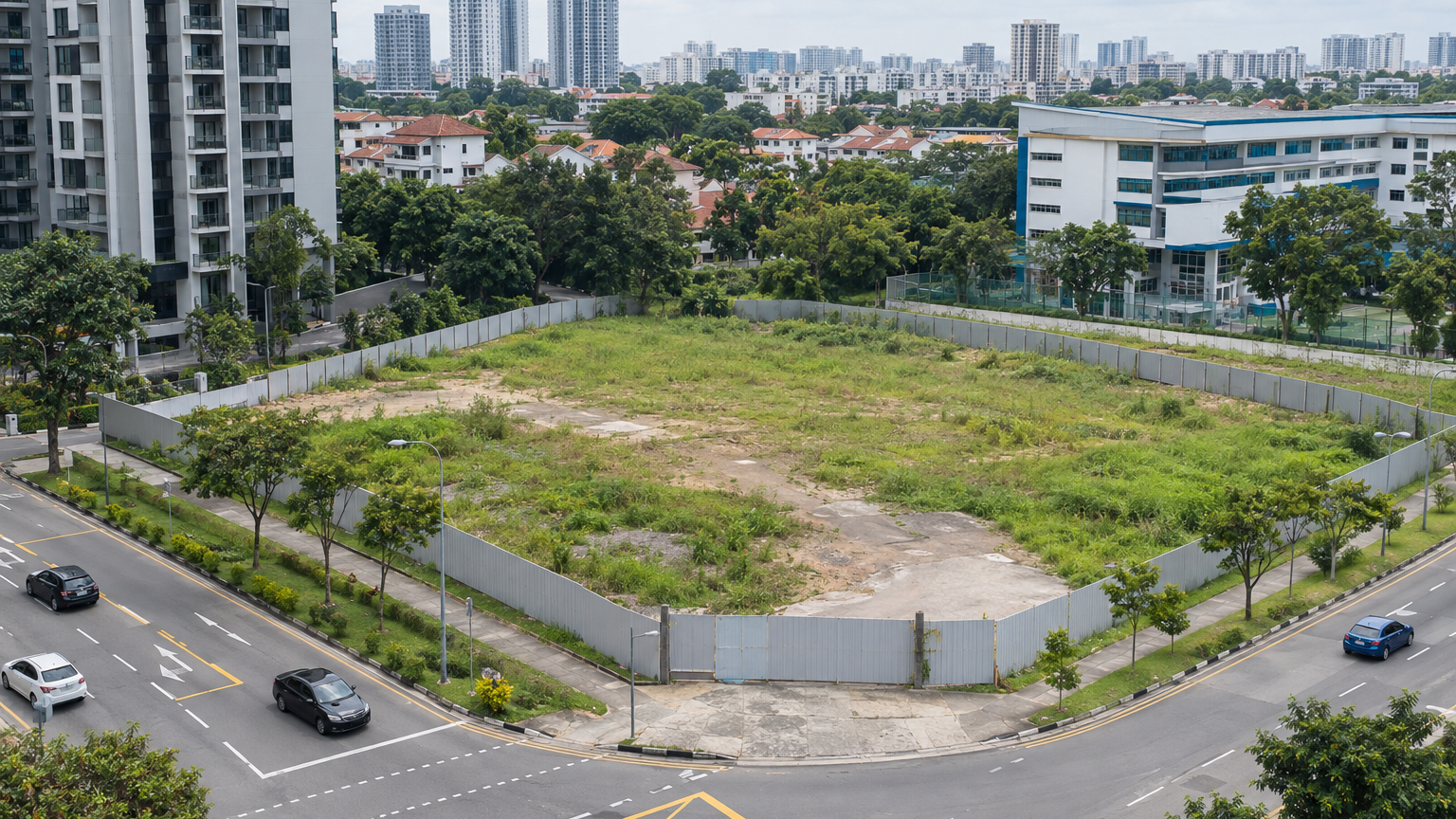
A developer has committed $208.099 million for a 99-year residential plot at Lorong Puntong, near Sin Ming Avenue. The Urban Redevelopment Authority (URA) awarded the site to Eco World Development (S) Pte. Ltd. on 18 September 2026.
Translated into the language commonly used for land tenders, the winning bid was about $1,612 per square foot per plot ratio (psf ppr). That is the price paid for each square foot of permitted floor area—not the future price of a condo unit—but it gives buyers an early look at the project’s substantial land bill.
What the $1,612 figure measures
URA lists the site’s maximum permissible gross floor area, or allowed built floor space, as 11,994 sq m. Its published tender rate of $17,350.26 per sq m converts to approximately $1,612 psf ppr.
Think of that rate as the developer spreading the land price across all the floor area it may build. It is different from the price per square foot that a buyer eventually sees, because a condo’s saleable apartment area is not identical to the planning floor area used in the tender calculation.
The developer must still pay for construction, financing, consultants, taxes, marketing and the risks involved in delivering the project. Design choices matter too. Different unit sizes, layout efficiency, shared facilities and specifications can produce different costs even on sites bought at similar land rates.
A nearby comparison shows why buyers should not read one tender result in isolation. In August 2026, URA awarded the larger Berlayar Drive residential site to Intrepid Investments Pte. Ltd. and GuocoLand (Singapore) Pte. Ltd. for $576.779 million, equivalent to roughly $1,515 psf ppr after converting URA’s published rate.
Berlayar Drive and Sin Ming are not interchangeable. They have different locations, plot sizes, surroundings and likely buyer pools. A higher land rate at one site does not automatically tell us which eventual project will offer better homes or stronger value.
Why land-price averages can climb
Government Land Sales, usually shortened to GLS, is the system through which the state releases land for development. Confirmed List sites are launched according to a scheduled programme, while Reserve List sites can be put up for tender after a developer application satisfies the Government’s requirements.
Land rates can rise because developers bid more aggressively for comparable sites. But a yearly average can also change because the mix of land sold changes. A year containing more central, transport-connected or otherwise sought-after sites may produce a higher average than one dominated by larger suburban parcels.
Plot size matters as well. If an average is calculated by dividing the combined tender prices by the combined permitted floor area, bigger sites carry more weight. One large, expensive parcel can therefore shift the result more than several small plots.
That is why decade-long figures are best rebuilt from URA’s individual past-sale records, with the same rules applied consistently to residential sites, mixed-use parcels and executive condominium land. Government geospatial data can also help readers locate and distinguish GLS parcels rather than treating similarly named sites as the same piece of land.
The practical lesson is simple: an islandwide average combines very different development opportunities. For a future launch buyer, the most useful comparison is usually between the subject site and genuinely competing projects nearby—not between that site and every residential tender awarded during the same year.
A measurement change complicates the decade view
There is another reason to handle long-term comparisons carefully. Singapore’s planning, building-control, fire-safety and land-administration agencies harmonised their floor-area definitions with effect from 1 September 2022.
Because psf ppr uses permitted floor area as its denominator, figures from before and after that date are not perfectly like-for-like. The older tender results remain useful, but a ten-year chart should flag the change instead of presenting every observation as though floor area had been measured on precisely the same basis throughout.
The longer-term rise in land rates can therefore reflect several things at once: developers’ bids, the locations and sizes of sites released, prevailing costs and the revised measurement basis. No single factor explains the whole movement.
A tender bid is also a judgement made years before the completed homes reach buyers. The developer is estimating what product may work, what competing supply may emerge and what households might eventually pay. Those assumptions can look different by launch time.
The future project will face plenty of competition
URA said the Confirmed List for the second half of 2026 could yield 4,745 private homes. Including other projects in the broader development pipeline, supply could reach about 61,000 private homes, including executive condominiums.
That matters because the future Sin Ming development will not launch in a vacuum. Buyers may be comparing it with other new projects, remaining developer stock and resale condos available around the same period.
For context, URA’s overall private residential price index rose 3.3% in 2025, while about 57,000 private homes, including executive condominiums, were in the pipeline at the end of that year. Independent residential research similarly considers incoming launches, land supply and buyer demand together rather than treating land bids as a standalone forecast of selling prices.
A costly site gives its developer less room to manoeuvre, but buyers still set limits through the alternatives they can choose. A competing project may offer more efficient layouts, an earlier completion date, a quieter stack or a lower total price even if its headline price per square foot looks similar.
What buyers should compare when plans emerge
The land award does not yet reveal which units will be pleasant to live in. That assessment becomes possible only after verified site plans, floor plans and project details are published.
Start with the proposed unit mix and layout efficiency. Two apartments with the same stated floor area can feel very different if one loses space to a long entrance passage, awkward corners or an oversized balcony.
Then examine the site plan at household level. Which stacks face roads, service areas or afternoon sun? How far apart are facing blocks? Is the advertised walk to transport practical, sheltered and suitable for children or older family members?
Finally, compare the eventual asking prices with actual transactions for nearby homes of similar size, tenure and age. Total price matters alongside price per square foot, especially when two-bedroom or three-bedroom choices come with materially different usable space.
As of the land award, the project’s launch name, selling prices, unit mix and facilities should remain treated as unannounced unless confirmed through official documents or by the developer. The $1,612 psf ppr rate tells us Eco World’s starting land cost; whether the resulting homes are compelling will depend on what is eventually built and what else buyers can purchase at the time.