Mount Elizabeth condo returns to market at unchanged S$580 million
The October tender may decide whether High Point can become a future Orchard launch, but buyers still have no units, prices or timetable to compare.
Published 2026-10-08 · 5 min read
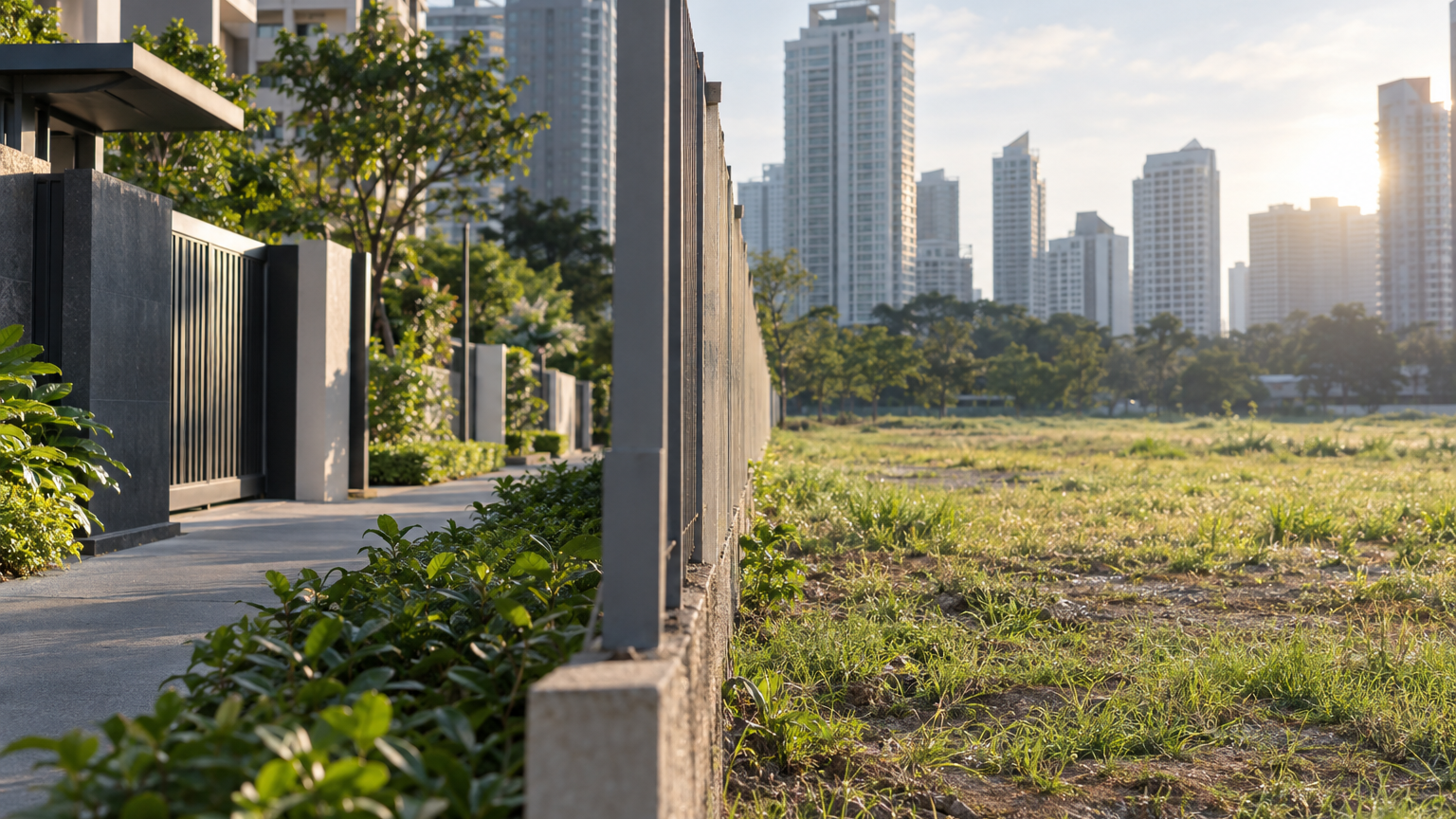
Four months after its previous collective-sale exercise, the 59-unit freehold condominium at 30 Mount Elizabeth is back on the market at the same S$580 million guide price. Marketing agent ETC launched the new public tender on 3 September 2026, with a scheduled closing time of 3pm on 12 October 2026.
For buyers watching Orchard-area new launches, the important point is simple: this is a land sale, not a condominium launch. No purchaser, redevelopment plan, unit mix, floor plan, selling price or completion date has been announced, so there is currently no future unit to reserve—or sensibly wait for.
The S$580 million figure is a land price
High Point occupies a 4,422.8 sq m, or approximately 47,607 sq ft, site at 30 Mount Elizabeth. ETC says the parcel is zoned residential under the URA Master Plan 2025 and has a building-height control of up to 36 storeys.
The marketing agent calculates that the S$580 million guide translates to about S$2,645 per sq ft per plot ratio, after including a stated 7% bonus floor area. “Per plot ratio” is a way of expressing the land price against the potential amount of floor space that could be built, rather than against the physical land area alone.
That S$2,645 figure should not be mistaken for the eventual price of a new home. A developer would still need to account for construction, consultants, financing, marketing and other costs, as well as decide what homes to build and what margin to seek.
Even the maximum amount of floor space is not enough to predict a launch price reliably. The economics will depend on an eventual approved design, the mix of large and small units, shared areas and the number of saleable square feet. None of those details is available yet.
An unchanged guide leaves the central question open
ETC previously put High Point up for collective sale in April 2026 at the same S$580 million guide, with that tender scheduled to close on 9 June. The September relaunch therefore preserves the owners’ asking position rather than lowering it to invite a different calculation from developers.
There is a useful distinction here. A guide price states what the sellers are seeking; it is neither a bid nor an agreed transaction price. Until the tender produces a buyer and a sale is completed through the required process, the site remains an existing condominium rather than a confirmed redevelopment.
Collective sales also have their own legal process. For a development at least 10 years old, the required majority is at least 80% of share value and 80% of strata area. An application to the Strata Titles Boards comes after a collective-sale agreement and a sale to a purchaser, subject to the applicable requirements.
The current tender consequently answers only the next question: whether a developer is prepared to acquire the whole site on acceptable terms. Planning, design, sales and construction stages would still follow.
Thirty-six storeys is a control, not a promised tower
A height control of up to 36 storeys helps explain the redevelopment interest around a sizeable freehold Orchard-area parcel. Swee Shou Fern, ETC’s Head of Investment Advisory, described such sites as scarce in the marketing agent’s relaunch statement.
But the control does not confirm that a 36-storey building will be approved or built. URA explains that the Master Plan guides Singapore’s land use and development over the medium term; individual proposals remain subject to the relevant planning and development requirements.
For a home buyer, that means the most practical unit-selection questions cannot yet be answered. There is no verified information on:
- how many homes may be proposed;
- whether there will be one tower or several blocks;
- the available bedroom types and internal areas;
- which stacks may face Orchard Road, the city or neighbouring buildings;
- facilities, parking provision or arrival routes;
- launch and construction schedules.
The hillside location may eventually influence entrances, landscaping and views, but any detailed claim now would be speculation. A planning parameter describes what may be possible; an approved project tells buyers what they can actually compare.
Should Orchard buyers wait?
Someone who must buy or move within a defined period should compare confirmed new launches and completed resale homes rather than treat High Point as incoming supply. Existing options can be assessed using actual layouts, facing, noise, maintenance charges and move-in timing. A proposed launch can only enter that comparison once a developer and credible programme exist.
Buyers with a longer horizon can keep the tender on a watchlist, but several milestones would need to occur before unit selection becomes meaningful: a successful land sale, completion of the collective-sale process, planning approval, a disclosed development scheme and an announced sales timetable.
Freehold tenure alone also does not settle the new-versus-resale choice. An eventual redevelopment could offer new fittings and more efficient facilities, while an existing home provides something especially valuable here: certainty about its space, surroundings and availability.
For now, the 12 October tender deadline concerns developers and High Point’s owners, not prospective purchasers of a future condominium. The next meaningful development is whether the S$580 million guide attracts an acceptable offer. Until then, Orchard buyers have a possible site to monitor—not a new launch to choose from.