Bayshore Drive’s 1,280-home project targets first-half 2028 launch
The planned development above Bedok South MRT station includes a mall and bus interchange. Here is what the reported timeline puts on buyers’ watchlists—and which details await launch materials.
Published 2026-11-18 · 5 min read
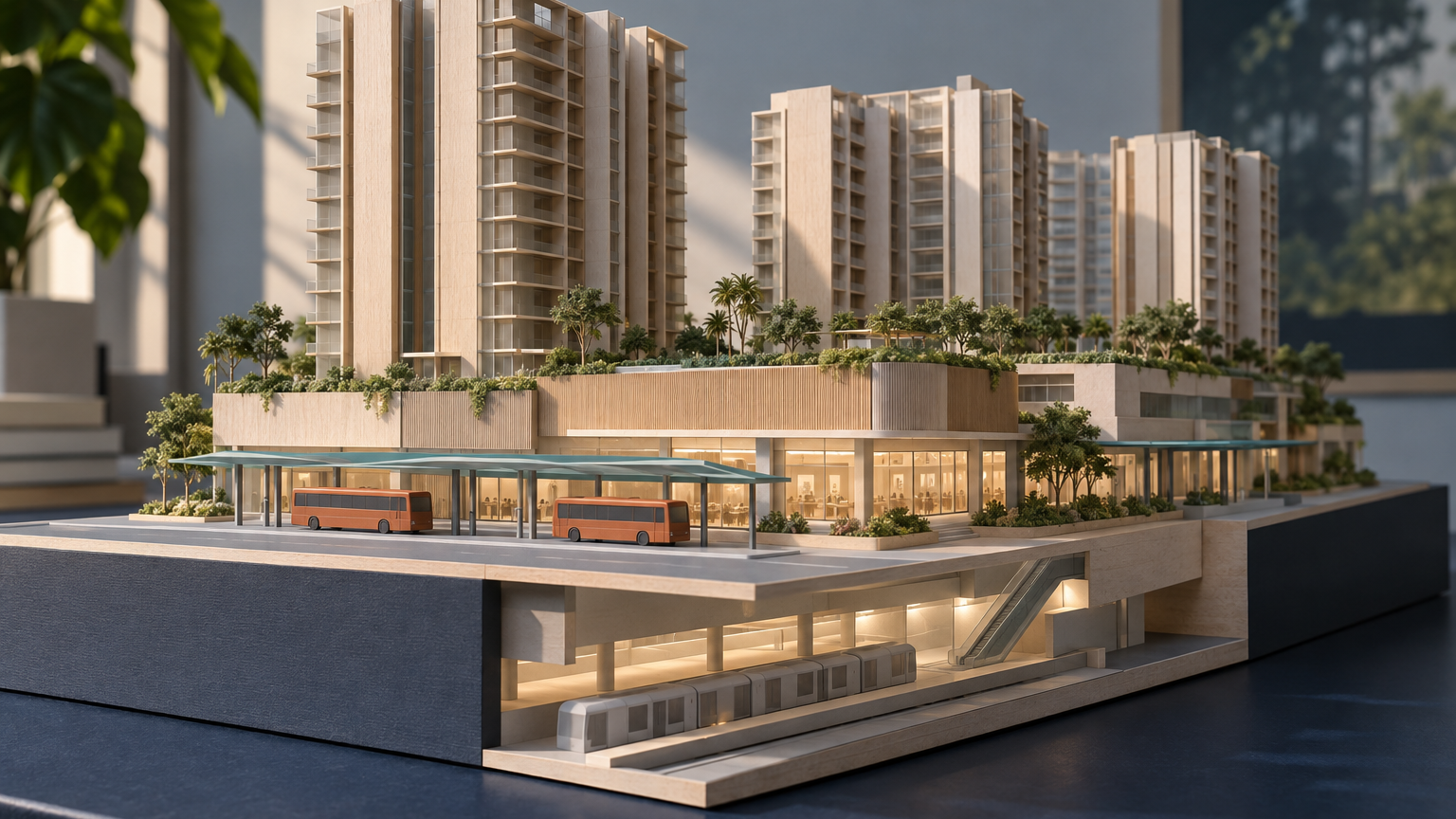
The Bayshore Drive integrated development is expected to launch in the first half of 2028, according to a reported update from Frasers Property Singapore CEO Tan Wee Hsien on November 16, 2026. The planned project brings together 1,280 homes, a retail mall and a bus interchange above Bedok South MRT station.
For buyers comparing future new launches, that gives this particular site both a timing window and a reason to follow it: housing combined with shopping and public transport in one development. The useful distinction is that the 2028 window is a reported company expectation, rather than a confirmed booking date or a date when homes will be ready to occupy.
What belongs on the Bayshore Drive watchlist?
Start with the site identity. This update concerns the Bayshore Drive integrated development, not every future housing project in Bayshore. Frasers Property reportedly secured the site jointly with Frasers Centrepoint Trust, Sunway MCL, Sekisui House and Lum Chang. Those are the five named participants in the reported consortium.
The reported development has three main components: the homes, a retail mall and a bus interchange, with Bedok South MRT station below. That combination is the project's most useful identifying feature at this stage. It is more specific than simply describing it as a new residential development in eastern Singapore.
A compact watchlist entry can therefore record the following:
- Site: Bayshore Drive.
- Reported residential scale: 1,280 homes.
- Other components: a retail mall and bus interchange, above Bedok South MRT station.
- Expected launch window: January to June 2028, based on the reported company timeline.
Keep those details together when comparing future announcements. A matching neighbourhood name alone is not enough to establish that an update concerns the same development; the site, consortium and integrated components provide a much clearer reference.
How far away is the expected launch?
The timing update came in November 2026, while the expected launch falls somewhere between January and June 2028. In calendar terms, that puts the reported window roughly 14 to 19 months after the update. This is a calculation from the reporting month and expected launch half-year, not an additional schedule supplied by the developer.
That interval helps distinguish a project worth monitoring from a launch with immediate sales arrangements to examine. The reported milestone is the launch itself. The retained report gives no completion or handover date, so the 2028 reference should stay attached to sales timing rather than a future move-in plan.
For a comparison sheet, one field labelled “expected launch” is more useful than a single undifferentiated project date. Later information can then be added separately—for example, a specific preview or booking date—without accidentally turning an early company expectation into a firm appointment.
What does the integrated description tell buyers?
The reported combination of homes, retail and transport gives buyers a concrete physical relationship to investigate when plans become available. The attraction to examine is how everyday journeys might connect within the development: leaving home, reaching the station, changing to a bus or visiting the shops. Those questions follow directly from the planned components, rather than from a facilities list.
The next useful evidence would be drawings showing those connections. Where are the residential entrances relative to the public areas? How are the routes separated or connected? These are questions for future plans, not claims about a design that has already been disclosed.
There is also an ownership distinction worth retaining. Frasers Property's reported 37.5% effective stake applies to the residential component. It should not be presented as its share of every part of the integrated development, or translated into a particular allocation of homes. The report identifies the residential stake but does not set out the ownership split for each other component.
For prospective buyers, that percentage is background on who is involved. It adds precision to the project record; it does not tell anyone which home to choose.
Which details still need launch materials?
The retained November report does not supply a project name, unit mix, floor plans, prices, facilities, tenure, booking arrangements or eligibility details. Its useful contribution is narrower: the site, partners, planned scale and components, residential ownership context and expected launch window.
That leaves two distinct stages of comparison. Today, the project can be tracked by location, overall concept and reported timing. A meaningful unit-level comparison will need the actual layouts, dimensions and pricing when those materials are available.
The next development to watch is therefore a more specific launch announcement and the accompanying project information. Until then, Bayshore Drive has a clear place on the future-launch watchlist: a reported 1,280-home integrated development targeting the first half of 2028, with the details needed to compare individual homes still outstanding in the retained reporting.